
**Current Lake Powell elevation stands at approximately 3,518.5 feet as of late August 2026, roughly 181 feet below full pool and 28 feet above the 3,490-foot minimum power pool, with storage at about 21–22% of capacity.** Trader consensus assigns the highest implied probability (49.5%) to the lake bottoming above 3,510 feet, followed by the 3,500–3,510 ft band (24.5%), reflecting Bureau of Reclamation 24-Month Study projections that place end-of-2026 levels near 3,507–3,516 feet under most-probable scenarios. The dominant driver is the exceptionally poor 2026 water-year hydrology. Unregulated inflow to Lake Powell is forecast at only 3.58–3.59 million acre-feet (37% of average), with April–July runoff at just 18% of average following historically low snowpack and record spring heat. July inflow measured only 9% of average, and August inflows are tracking similarly weak. These conditions have already prompted operational changes, including a reduction in Glen Canyon Dam releases to 6.0 maf for water year 2026 (down from an initially planned 7.48 maf) and supplemental releases of 0.66–1.0 maf from Flaming Gorge Reservoir under drought-response protocols to provide a buffer above critical thresholds. Projections show further seasonal decline through fall and winter, with the most-probable run reaching the low 3,500s by year-end and the probable-minimum scenario approaching or briefly testing below 3,490 feet in early 2027. The low 6% probability assigned to a drop below 3,490 feet aligns with the smaller likelihood of that tail-risk outcome, while the clustering of probabilities around 3,500–3,510 feet captures the range of uncertainty in remaining 2026 precipitation, temperature-driven evaporation, and any additional upstream management actions. Upcoming inflow updates from the Colorado Basin River Forecast Center and the next 24-Month Study revision will be key near-term catalysts for shifts in these market-implied odds.
Experimental AI-generated summary referencing Polymarket data. This is not trading advice and plays no role in how this market resolves. · UpdatedHow low will Lake Powell drop?
How low will Lake Powell drop?
Above 3,510 ft 50%
3,500–3,510 ft 25%
3,490–3,500 ft 21%
Below 3,490 ft 6%
Above 3,510 ft
50%
3,500–3,510 ft
25%
3,490–3,500 ft
21%
Below 3,490 ft
6%
Above 3,510 ft 50%
3,500–3,510 ft 25%
3,490–3,500 ft 21%
Below 3,490 ft 6%
Above 3,510 ft
50%
3,500–3,510 ft
25%
3,490–3,500 ft
21%
Below 3,490 ft
6%
Resolution is determined by the lowest daily elevation recorded at Lake Powell (Glen Canyon Dam, USBR site) between market creation and March 31, 2027. Because a lower reading can occur at any point up to March 31, 2027, all outcomes are settled after the window closes, based on the lowest daily elevation recorded during the window.
The resolution source is the minimum daily lake elevation published by the U.S. Bureau of Reclamation for Lake Powell at Glen Canyon Dam, available at https://data.usbr.gov/catalog/2362/item/508. USBR data is provisional and subject to revision; the lowest daily elevation reflected in USBR data as of April 15, 2027 governs, and revisions published after April 15, 2027 will not change the outcome. Daily elevation data published at https://lakepowell.water-data.com/ may also be referenced, but if it disagrees with USBR, the USBR value governs.
Market Opened: Aug 17, 2026, 5:49 PM ET
Resolution Source
https://data.usbr.gov/catalog/2362/item/508Resolver
0x69c47De9D...Resolution is determined by the lowest daily elevation recorded at Lake Powell (Glen Canyon Dam, USBR site) between market creation and March 31, 2027. Because a lower reading can occur at any point up to March 31, 2027, all outcomes are settled after the window closes, based on the lowest daily elevation recorded during the window.
The resolution source is the minimum daily lake elevation published by the U.S. Bureau of Reclamation for Lake Powell at Glen Canyon Dam, available at https://data.usbr.gov/catalog/2362/item/508. USBR data is provisional and subject to revision; the lowest daily elevation reflected in USBR data as of April 15, 2027 governs, and revisions published after April 15, 2027 will not change the outcome. Daily elevation data published at https://lakepowell.water-data.com/ may also be referenced, but if it disagrees with USBR, the USBR value governs.
Resolution Source
https://data.usbr.gov/catalog/2362/item/508Resolver
0x69c47De9D...**Current Lake Powell elevation stands at approximately 3,518.5 feet as of late August 2026, roughly 181 feet below full pool and 28 feet above the 3,490-foot minimum power pool, with storage at about 21–22% of capacity.** Trader consensus assigns the highest implied probability (49.5%) to the lake bottoming above 3,510 feet, followed by the 3,500–3,510 ft band (24.5%), reflecting Bureau of Reclamation 24-Month Study projections that place end-of-2026 levels near 3,507–3,516 feet under most-probable scenarios. The dominant driver is the exceptionally poor 2026 water-year hydrology. Unregulated inflow to Lake Powell is forecast at only 3.58–3.59 million acre-feet (37% of average), with April–July runoff at just 18% of average following historically low snowpack and record spring heat. July inflow measured only 9% of average, and August inflows are tracking similarly weak. These conditions have already prompted operational changes, including a reduction in Glen Canyon Dam releases to 6.0 maf for water year 2026 (down from an initially planned 7.48 maf) and supplemental releases of 0.66–1.0 maf from Flaming Gorge Reservoir under drought-response protocols to provide a buffer above critical thresholds. Projections show further seasonal decline through fall and winter, with the most-probable run reaching the low 3,500s by year-end and the probable-minimum scenario approaching or briefly testing below 3,490 feet in early 2027. The low 6% probability assigned to a drop below 3,490 feet aligns with the smaller likelihood of that tail-risk outcome, while the clustering of probabilities around 3,500–3,510 feet captures the range of uncertainty in remaining 2026 precipitation, temperature-driven evaporation, and any additional upstream management actions. Upcoming inflow updates from the Colorado Basin River Forecast Center and the next 24-Month Study revision will be key near-term catalysts for shifts in these market-implied odds.
Experimental AI-generated summary referencing Polymarket data. This is not trading advice and plays no role in how this market resolves. · Updated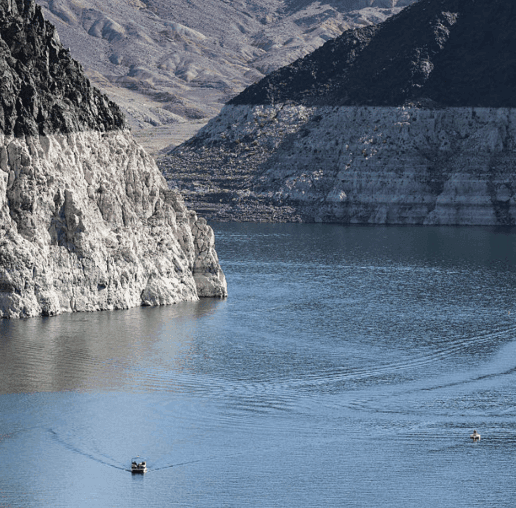


Beware of external links.
Beware of external links.
Frequently Asked Questions