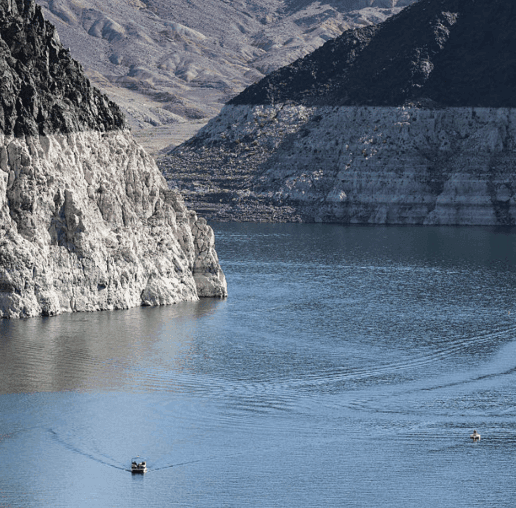
Lake Mead stands at a record-low 1,038.94 feet elevation as of late August 2026, roughly 26% full, driven by multi-year drought across the Colorado River basin, below-average snowpack runoff, and elevated evaporative losses from rising temperatures. U.S. Bureau of Reclamation projections from the July 2026 24-month study forecast a most-probable end-of-year level near 1,037 feet, with continued declines expected under shortage operations and high downstream demand. These conditions, compounded by new post-2026 operating guidelines amid legal challenges, position the below-1,028-foot outcome as the market leader by reflecting sustained hydrologic deficits and limited near-term recovery prospects.
Experimental AI-generated summary referencing Polymarket data. This is not trading advice and plays no role in how this market resolves. · UpdatedHow low will Lake Mead drop?
How low will Lake Mead drop?
Below 1,028 ft 54%
1,028–1,033 ft 30.8%
Above 1,038 ft 14%
1,033–1,038 ft 4.5%
$14,305 Vol.
$14,305 Vol.
Apr 15, 2027
Above 1,038 ft
14%
1,033–1,038 ft
4%
1,028–1,033 ft
31%
Below 1,028 ft
54%
Below 1,028 ft 54%
1,028–1,033 ft 30.8%
Above 1,038 ft 14%
1,033–1,038 ft 4.5%
$14,305 Vol.
$14,305 Vol.
Apr 15, 2027
Above 1,038 ft
$3,208 Vol.
14%
1,033–1,038 ft
$1,947 Vol.
4%
1,028–1,033 ft
$1,868 Vol.
31%
Below 1,028 ft
$7,282 Vol.
54%
This market resolves "Yes" if the lowest daily elevation recorded at Lake Mead (Hoover Dam, USBR site) between market creation and March 31, 2027 does not fall below 1,038.00 feet. Otherwise, this market resolves "No."
Resolution is determined by the lowest daily elevation recorded at Lake Mead (Hoover Dam, USBR site) between market creation and March 31, 2027. Because a lower reading can occur at any point up to March 31, 2027, all outcomes are settled after the window closes, based on the lowest daily elevation recorded during the window.
The resolution source is the minimum daily lake elevation published by the U.S. Bureau of Reclamation for Lake Mead at Hoover Dam, available at https://data.usbr.gov/catalog/4370/item/6123. USBR data is provisional and subject to revision; the lowest daily elevation reflected in USBR data as of April 15, 2027 governs, and revisions published after April 15, 2027 will not change the outcome. Daily elevation data published at https://lakemead.water-data.com/ may also be referenced, but if it disagrees with USBR, the USBR value governs.This market resolves "Yes" if the lowest daily elevation recorded at Lake Mead (Hoover Dam, USBR site) between market creation and March 31, 2027 falls below 1,038.00 feet but does not fall below 1,033.00 feet. Otherwise, this market resolves "No."
Resolution is determined by the lowest daily elevation recorded at Lake Mead (Hoover Dam, USBR site) between market creation and March 31, 2027. Because a lower reading can occur at any point up to March 31, 2027, all outcomes are settled after the window closes, based on the lowest daily elevation recorded during the window.
The resolution source is the minimum daily lake elevation published by the U.S. Bureau of Reclamation for Lake Mead at Hoover Dam, available at https://data.usbr.gov/catalog/4370/item/6123. USBR data is provisional and subject to revision; the lowest daily elevation reflected in USBR data as of April 15, 2027 governs, and revisions published after April 15, 2027 will not change the outcome. Daily elevation data published at https://lakemead.water-data.com/ may also be referenced, but if it disagrees with USBR, the USBR value governs.This market resolves "Yes" if the lowest daily elevation recorded at Lake Mead (Hoover Dam, USBR site) between market creation and March 31, 2027 falls below 1,033.00 feet but does not fall below 1,028.00 feet. Otherwise, this market resolves "No."
Resolution is determined by the lowest daily elevation recorded at Lake Mead (Hoover Dam, USBR site) between market creation and March 31, 2027. Because a lower reading can occur at any point up to March 31, 2027, all outcomes are settled after the window closes, based on the lowest daily elevation recorded during the window.
The resolution source is the minimum daily lake elevation published by the U.S. Bureau of Reclamation for Lake Mead at Hoover Dam, available at https://data.usbr.gov/catalog/4370/item/6123. USBR data is provisional and subject to revision; the lowest daily elevation reflected in USBR data as of April 15, 2027 governs, and revisions published after April 15, 2027 will not change the outcome. Daily elevation data published at https://lakemead.water-data.com/ may also be referenced, but if it disagrees with USBR, the USBR value governs.This market resolves "Yes" if the lowest daily elevation recorded at Lake Mead (Hoover Dam, USBR site) between market creation and March 31, 2027 falls below 1,028.00 feet. Otherwise, this market resolves "No." For reference, 1,025 feet is the threshold below which the Lower Colorado River Basin enters its most severe declared shortage tier (Tier 3).
Resolution is determined by the lowest daily elevation recorded at Lake Mead (Hoover Dam, USBR site) between market creation and March 31, 2027. Because a lower reading can occur at any point up to March 31, 2027, all outcomes are settled after the window closes, based on the lowest daily elevation recorded during the window.
The resolution source is the minimum daily lake elevation published by the U.S. Bureau of Reclamation for Lake Mead at Hoover Dam, available at https://data.usbr.gov/catalog/4370/item/6123. USBR data is provisional and subject to revision; the lowest daily elevation reflected in USBR data as of April 15, 2027 governs, and revisions published after April 15, 2027 will not change the outcome. Daily elevation data published at https://lakemead.water-data.com/ may also be referenced, but if it disagrees with USBR, the USBR value governs.Lake Mead stands at a record-low 1,038.94 feet elevation as of late August 2026, roughly 26% full, driven by multi-year drought across the Colorado River basin, below-average snowpack runoff, and elevated evaporative losses from rising temperatures. U.S. Bureau of Reclamation projections from the July 2026 24-month study forecast a most-probable end-of-year level near 1,037 feet, with continued declines expected under shortage operations and high downstream demand. These conditions, compounded by new post-2026 operating guidelines amid legal challenges, position the below-1,028-foot outcome as the market leader by reflecting sustained hydrologic deficits and limited near-term recovery prospects.
This market resolves "Yes" if the lowest daily elevation recorded at Lake Mead (Hoover Dam, USBR site) between market creation and March 31, 2027 does not fall below 1,038.00 feet. Otherwise, this market resolves "No."
Resolution is determined by the lowest daily elevation recorded at Lake Mead (Hoover Dam, USBR site) between market creation and March 31, 2027. Because a lower reading can occur at any point up to March 31, 2027, all outcomes are settled after the window closes, based on the lowest daily elevation recorded during the window.
The resolution source is the minimum daily lake elevation published by the U.S. Bureau of Reclamation for Lake Mead at Hoover Dam, available at https://data.usbr.gov/catalog/4370/item/6123. USBR data is provisional and subject to revision; the lowest daily elevation reflected in USBR data as of April 15, 2027 governs, and revisions published after April 15, 2027 will not change the outcome. Daily elevation data published at https://lakemead.water-data.com/ may also be referenced, but if it disagrees with USBR, the USBR value governs.
Resolution is determined by the lowest daily elevation recorded at Lake Mead (Hoover Dam, USBR site) between market creation and March 31, 2027. Because a lower reading can occur at any point up to March 31, 2027, all outcomes are settled after the window closes, based on the lowest daily elevation recorded during the window.
The resolution source is the minimum daily lake elevation published by the U.S. Bureau of Reclamation for Lake Mead at Hoover Dam, available at https://data.usbr.gov/catalog/4370/item/6123. USBR data is provisional and subject to revision; the lowest daily elevation reflected in USBR data as of April 15, 2027 governs, and revisions published after April 15, 2027 will not change the outcome. Daily elevation data published at https://lakemead.water-data.com/ may also be referenced, but if it disagrees with USBR, the USBR value governs.
Market Opened: Aug 17, 2026, 5:48 PM ET
Volume
$14,305End Date
Apr 15, 2027Market Opened
Aug 17, 2026, 5:48 PM ETResolution Source
https://data.usbr.gov/catalog/4370/item/6123Resolver
0x69c47De9D...This market resolves "Yes" if the lowest daily elevation recorded at Lake Mead (Hoover Dam, USBR site) between market creation and March 31, 2027 does not fall below 1,038.00 feet. Otherwise, this market resolves "No."
Resolution is determined by the lowest daily elevation recorded at Lake Mead (Hoover Dam, USBR site) between market creation and March 31, 2027. Because a lower reading can occur at any point up to March 31, 2027, all outcomes are settled after the window closes, based on the lowest daily elevation recorded during the window.
The resolution source is the minimum daily lake elevation published by the U.S. Bureau of Reclamation for Lake Mead at Hoover Dam, available at https://data.usbr.gov/catalog/4370/item/6123. USBR data is provisional and subject to revision; the lowest daily elevation reflected in USBR data as of April 15, 2027 governs, and revisions published after April 15, 2027 will not change the outcome. Daily elevation data published at https://lakemead.water-data.com/ may also be referenced, but if it disagrees with USBR, the USBR value governs.This market resolves "Yes" if the lowest daily elevation recorded at Lake Mead (Hoover Dam, USBR site) between market creation and March 31, 2027 falls below 1,038.00 feet but does not fall below 1,033.00 feet. Otherwise, this market resolves "No."
Resolution is determined by the lowest daily elevation recorded at Lake Mead (Hoover Dam, USBR site) between market creation and March 31, 2027. Because a lower reading can occur at any point up to March 31, 2027, all outcomes are settled after the window closes, based on the lowest daily elevation recorded during the window.
The resolution source is the minimum daily lake elevation published by the U.S. Bureau of Reclamation for Lake Mead at Hoover Dam, available at https://data.usbr.gov/catalog/4370/item/6123. USBR data is provisional and subject to revision; the lowest daily elevation reflected in USBR data as of April 15, 2027 governs, and revisions published after April 15, 2027 will not change the outcome. Daily elevation data published at https://lakemead.water-data.com/ may also be referenced, but if it disagrees with USBR, the USBR value governs.This market resolves "Yes" if the lowest daily elevation recorded at Lake Mead (Hoover Dam, USBR site) between market creation and March 31, 2027 falls below 1,033.00 feet but does not fall below 1,028.00 feet. Otherwise, this market resolves "No."
Resolution is determined by the lowest daily elevation recorded at Lake Mead (Hoover Dam, USBR site) between market creation and March 31, 2027. Because a lower reading can occur at any point up to March 31, 2027, all outcomes are settled after the window closes, based on the lowest daily elevation recorded during the window.
The resolution source is the minimum daily lake elevation published by the U.S. Bureau of Reclamation for Lake Mead at Hoover Dam, available at https://data.usbr.gov/catalog/4370/item/6123. USBR data is provisional and subject to revision; the lowest daily elevation reflected in USBR data as of April 15, 2027 governs, and revisions published after April 15, 2027 will not change the outcome. Daily elevation data published at https://lakemead.water-data.com/ may also be referenced, but if it disagrees with USBR, the USBR value governs.This market resolves "Yes" if the lowest daily elevation recorded at Lake Mead (Hoover Dam, USBR site) between market creation and March 31, 2027 falls below 1,028.00 feet. Otherwise, this market resolves "No." For reference, 1,025 feet is the threshold below which the Lower Colorado River Basin enters its most severe declared shortage tier (Tier 3).
Resolution is determined by the lowest daily elevation recorded at Lake Mead (Hoover Dam, USBR site) between market creation and March 31, 2027. Because a lower reading can occur at any point up to March 31, 2027, all outcomes are settled after the window closes, based on the lowest daily elevation recorded during the window.
The resolution source is the minimum daily lake elevation published by the U.S. Bureau of Reclamation for Lake Mead at Hoover Dam, available at https://data.usbr.gov/catalog/4370/item/6123. USBR data is provisional and subject to revision; the lowest daily elevation reflected in USBR data as of April 15, 2027 governs, and revisions published after April 15, 2027 will not change the outcome. Daily elevation data published at https://lakemead.water-data.com/ may also be referenced, but if it disagrees with USBR, the USBR value governs.Lake Mead stands at a record-low 1,038.94 feet elevation as of late August 2026, roughly 26% full, driven by multi-year drought across the Colorado River basin, below-average snowpack runoff, and elevated evaporative losses from rising temperatures. U.S. Bureau of Reclamation projections from the July 2026 24-month study forecast a most-probable end-of-year level near 1,037 feet, with continued declines expected under shortage operations and high downstream demand. These conditions, compounded by new post-2026 operating guidelines amid legal challenges, position the below-1,028-foot outcome as the market leader by reflecting sustained hydrologic deficits and limited near-term recovery prospects.
This market resolves "Yes" if the lowest daily elevation recorded at Lake Mead (Hoover Dam, USBR site) between market creation and March 31, 2027 does not fall below 1,038.00 feet. Otherwise, this market resolves "No."
Resolution is determined by the lowest daily elevation recorded at Lake Mead (Hoover Dam, USBR site) between market creation and March 31, 2027. Because a lower reading can occur at any point up to March 31, 2027, all outcomes are settled after the window closes, based on the lowest daily elevation recorded during the window.
The resolution source is the minimum daily lake elevation published by the U.S. Bureau of Reclamation for Lake Mead at Hoover Dam, available at https://data.usbr.gov/catalog/4370/item/6123. USBR data is provisional and subject to revision; the lowest daily elevation reflected in USBR data as of April 15, 2027 governs, and revisions published after April 15, 2027 will not change the outcome. Daily elevation data published at https://lakemead.water-data.com/ may also be referenced, but if it disagrees with USBR, the USBR value governs.
Resolution is determined by the lowest daily elevation recorded at Lake Mead (Hoover Dam, USBR site) between market creation and March 31, 2027. Because a lower reading can occur at any point up to March 31, 2027, all outcomes are settled after the window closes, based on the lowest daily elevation recorded during the window.
The resolution source is the minimum daily lake elevation published by the U.S. Bureau of Reclamation for Lake Mead at Hoover Dam, available at https://data.usbr.gov/catalog/4370/item/6123. USBR data is provisional and subject to revision; the lowest daily elevation reflected in USBR data as of April 15, 2027 governs, and revisions published after April 15, 2027 will not change the outcome. Daily elevation data published at https://lakemead.water-data.com/ may also be referenced, but if it disagrees with USBR, the USBR value governs.
Volume
$14,305End Date
Apr 15, 2027Market Opened
Aug 17, 2026, 5:48 PM ETResolution Source
https://data.usbr.gov/catalog/4370/item/6123Resolver
0x69c47De9D...Lake Mead stands at a record-low 1,038.94 feet elevation as of late August 2026, roughly 26% full, driven by multi-year drought across the Colorado River basin, below-average snowpack runoff, and elevated evaporative losses from rising temperatures. U.S. Bureau of Reclamation projections from the July 2026 24-month study forecast a most-probable end-of-year level near 1,037 feet, with continued declines expected under shortage operations and high downstream demand. These conditions, compounded by new post-2026 operating guidelines amid legal challenges, position the below-1,028-foot outcome as the market leader by reflecting sustained hydrologic deficits and limited near-term recovery prospects.
Experimental AI-generated summary referencing Polymarket data. This is not trading advice and plays no role in how this market resolves. · Updated
Beware of external links.
Beware of external links.
Frequently Asked Questions