
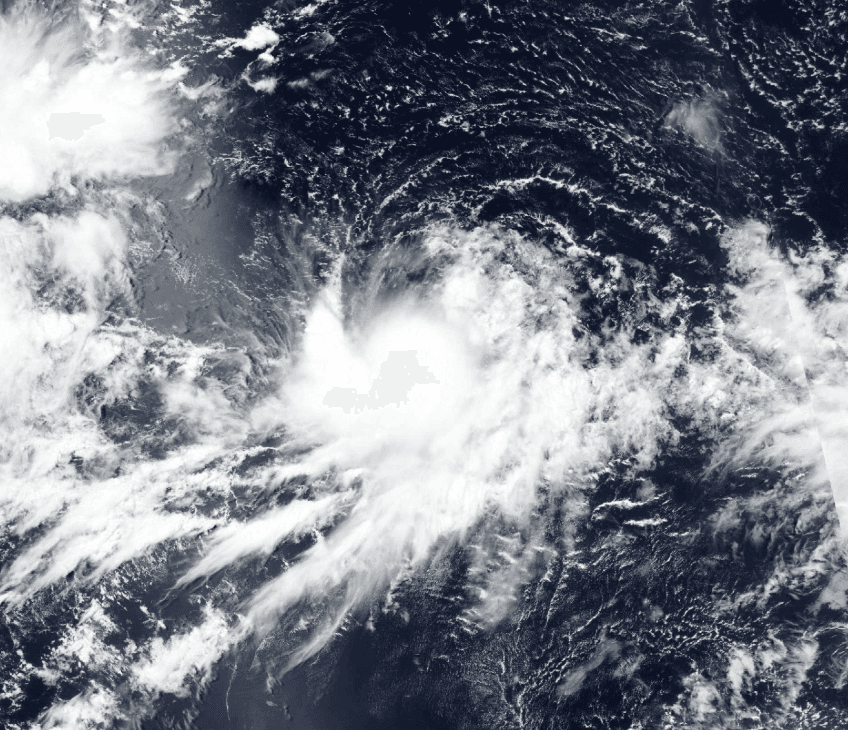
Tropical Storm Saudel, currently positioned in the northeastern South China Sea near 23–24°N, 117°E as of early September 2026, has regenerated after an earlier land interaction and weakening. Forecasters from agencies including the Joint Typhoon Warning Center, Hong Kong Observatory, and China Meteorological Administration project a slow northwestward to west-northwestward track under monsoon steering influences, bringing the center toward the eastern Guangdong coast within the next 24–48 hours. The system is expected to weaken steadily due to land interaction, lower ocean heat content near shore, and increasing shear, with most guidance showing dissipation as a tropical cyclone shortly after any coastal crossing. Key variables for landfall probability include subtle shifts in the monsoon trough and high-pressure ridging that could alter the final approach angle or keep the center offshore longer.
Experimental AI-generated summary referencing Polymarket data. This is not trading advice and plays no role in how this market resolves. · UpdatedWhere will Tropical Storm Saudel make landfall?
Where will Tropical Storm Saudel make landfall?
$500,138 Vol.
Japan
<1%
$500,138 Vol.
Japan
<1%
A market resolves "Yes" if the center of Saudel's circulation physically crosses the coastline of that country, as plotted by the Japan Meteorological Agency's (JMA) position advisories placing the center over that country's land (https://www.jma.go.jp/bosai/map.html#contents=typhoon&lang=en), or as confirmed by credible international news reporting.
JMA is the primary resolution source: if a JMA advisory plots the center over a country's land, that market resolves "Yes" regardless of what other sources say; if no JMA advisory plots the center on land but credible reporting confirms the center crossed the coastline between discrete advisory fixes, the market also resolves "Yes." A disagreement exists only when a JMA advisory and credible reporting make contradictory claims about the storm's position at the same point in time; in that case, JMA is the default resolution source.
Territorial definitions:
"China" refers to all territory under the administration of the People's Republic of China, including the Special Administrative Regions of Hong Kong and Macau, and excluding Taiwan.
"Japan" refers to all territory under the administration of Japan, including the four main islands (Honshu, Hokkaido, Kyushu, and Shikoku), Okinawa, the Ryukyu Islands, the Ogasawara Islands, and all other Japanese islands.
"South Korea" refers to all territory under the administration of the Republic of Korea, including Jeju Island and all outlying islands.
The most recently issued JMA advisory prior to the crossing must classify Saudel as a tropical cyclone (tropical depression or higher); a crossing while the system is extratropical, dissipated, or absorbed does not count. For every market, the classification and position determination in effect immediately prior to the qualifying crossing are fixed by that single JMA advisory and are not changed by any later real-time advisory, reclassification, or post-season best-track reanalysis.
Market Opened: Aug 20, 2026, 11:14 AM ET
Resolution Source
https://www.jma.go.jp/bosai/map.html#contents=typhoon&lang=enResolver
0x65070BE91...Outcome proposed: No
Disputed
Outcome proposed: No
Disputed
Final review
A market resolves "Yes" if the center of Saudel's circulation physically crosses the coastline of that country, as plotted by the Japan Meteorological Agency's (JMA) position advisories placing the center over that country's land (https://www.jma.go.jp/bosai/map.html#contents=typhoon&lang=en), or as confirmed by credible international news reporting.
JMA is the primary resolution source: if a JMA advisory plots the center over a country's land, that market resolves "Yes" regardless of what other sources say; if no JMA advisory plots the center on land but credible reporting confirms the center crossed the coastline between discrete advisory fixes, the market also resolves "Yes." A disagreement exists only when a JMA advisory and credible reporting make contradictory claims about the storm's position at the same point in time; in that case, JMA is the default resolution source.
Territorial definitions:
"China" refers to all territory under the administration of the People's Republic of China, including the Special Administrative Regions of Hong Kong and Macau, and excluding Taiwan.
"Japan" refers to all territory under the administration of Japan, including the four main islands (Honshu, Hokkaido, Kyushu, and Shikoku), Okinawa, the Ryukyu Islands, the Ogasawara Islands, and all other Japanese islands.
"South Korea" refers to all territory under the administration of the Republic of Korea, including Jeju Island and all outlying islands.
The most recently issued JMA advisory prior to the crossing must classify Saudel as a tropical cyclone (tropical depression or higher); a crossing while the system is extratropical, dissipated, or absorbed does not count. For every market, the classification and position determination in effect immediately prior to the qualifying crossing are fixed by that single JMA advisory and are not changed by any later real-time advisory, reclassification, or post-season best-track reanalysis.
Resolution Source
https://www.jma.go.jp/bosai/map.html#contents=typhoon&lang=enResolver
0x65070BE91...Outcome proposed: No
Disputed
Outcome proposed: No
Disputed
Final review
Tropical Storm Saudel, currently positioned in the northeastern South China Sea near 23–24°N, 117°E as of early September 2026, has regenerated after an earlier land interaction and weakening. Forecasters from agencies including the Joint Typhoon Warning Center, Hong Kong Observatory, and China Meteorological Administration project a slow northwestward to west-northwestward track under monsoon steering influences, bringing the center toward the eastern Guangdong coast within the next 24–48 hours. The system is expected to weaken steadily due to land interaction, lower ocean heat content near shore, and increasing shear, with most guidance showing dissipation as a tropical cyclone shortly after any coastal crossing. Key variables for landfall probability include subtle shifts in the monsoon trough and high-pressure ridging that could alter the final approach angle or keep the center offshore longer.
Experimental AI-generated summary referencing Polymarket data. This is not trading advice and plays no role in how this market resolves. · Updated

Beware of external links.
Beware of external links.
Frequently Asked Questions