
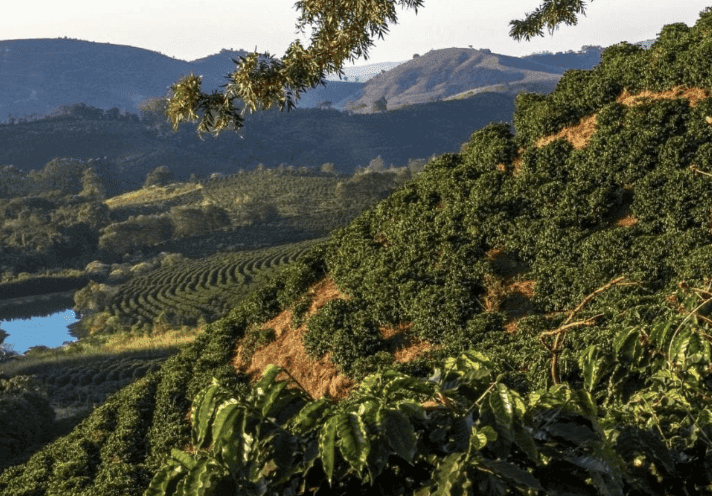
Recent excessive rainfall across Minas Gerais has disrupted the 2026 harvest with irregular September downpours elevating soil moisture and triggering early flowering, yet trader odds for peak severe drought (defined by official thresholds like SPI or SPEI indices) cluster around moderate levels amid El Niño-driven uncertainty. Stronger El Niño phases historically shift precipitation toward concentrated events separated by extended dry spells, stressing arabica flowering and fruit set from September through March when evapotranspiration peaks. Key variables include INMET and NOAA model consensus on rainfall distribution, temperature anomalies above baseline, and soil water deficit accumulation; weaker or absent dry intervals could suppress odds below 20 percent, while prolonged veranicos or heat stress would elevate probabilities toward 60 percent or higher.
Experimental AI-generated summary referencing Polymarket data. This is not trading advice and plays no role in how this market resolves. · UpdatedPeak Severe Drought in Minas Gerais during the Coffee Growing Season?
Peak Severe Drought in Minas Gerais during the Coffee Growing Season?
20% to 39.99% 33%
40% to 59.99% 21%
5% to 19.99% 20%
60% or more 10%
Under 5%
8%
5% to 19.99%
20%
20% to 39.99%
33%
40% to 59.99%
21%
60% or more
13%
20% to 39.99% 33%
40% to 59.99% 21%
5% to 19.99% 20%
60% or more 10%
Under 5%
8%
5% to 19.99%
20%
20% to 39.99%
33%
40% to 59.99%
21%
60% or more
13%
For the purpose of this market, the "2026/27 coffee growing season" is defined as the six-month window (September 2026 through February 2027) which corresponds to the flowering and bean-development period for arabica coffee in Minas Gerais. This is the crop-development period for the coffee harvested in 2027, and is distinct from the 2026 harvest (typically May–September 2026) and the subsequent shipping and marketing period for that crop. This label is descriptive only; resolution depends solely on the calendar months stated above.
For each month in the window, the S2+ drought area percentage is the percentage of the total area of the state of Minas Gerais classified at S2 (Seca Grave) or a more severe category. This is the value shown in the "S2–S4" column of ANA's "Área Acumulada" (accumulated area) tabular view for Minas Gerais, in the official tabular data published by the Agência Nacional de Águas e Saneamento Básico (ANA). The "peak" is the single highest monthly S2+ drought area percentage across the six months as published by ANA.
This market will resolve once ANA has published an S2–S4 "Área Acumulada" figure for Minas Gerais for all six reference months, or at 11:59 PM ET on April 29, 2027 (60 calendar days after the end of February 2027), whichever occurs first. The resolving value is the highest monthly S2–S4 "Área Acumulada" figure among the reference months for which ANA has published data as of that time, using each month's figure as published by ANA as of that time, inclusive of any revisions ANA has published by then. If ANA has published data for none of the six reference months as of 11:59 PM ET on April 29, 2027, this market will resolve to "Under 5%".
The resolution source for this market will be data published by the Agência Nacional de Águas e Saneamento Básico (ANA), found at https://monitordesecas.ana.gov.br/dados-tabulares?tipo=1&area=31.
Market Opened: Sep 8, 2026, 4:33 PM ET
Resolution Source
https://monitordesecas.ana.gov.br/dados-tabulares?tipo=1&area=31Resolver
0x69c47De9D...For the purpose of this market, the "2026/27 coffee growing season" is defined as the six-month window (September 2026 through February 2027) which corresponds to the flowering and bean-development period for arabica coffee in Minas Gerais. This is the crop-development period for the coffee harvested in 2027, and is distinct from the 2026 harvest (typically May–September 2026) and the subsequent shipping and marketing period for that crop. This label is descriptive only; resolution depends solely on the calendar months stated above.
For each month in the window, the S2+ drought area percentage is the percentage of the total area of the state of Minas Gerais classified at S2 (Seca Grave) or a more severe category. This is the value shown in the "S2–S4" column of ANA's "Área Acumulada" (accumulated area) tabular view for Minas Gerais, in the official tabular data published by the Agência Nacional de Águas e Saneamento Básico (ANA). The "peak" is the single highest monthly S2+ drought area percentage across the six months as published by ANA.
This market will resolve once ANA has published an S2–S4 "Área Acumulada" figure for Minas Gerais for all six reference months, or at 11:59 PM ET on April 29, 2027 (60 calendar days after the end of February 2027), whichever occurs first. The resolving value is the highest monthly S2–S4 "Área Acumulada" figure among the reference months for which ANA has published data as of that time, using each month's figure as published by ANA as of that time, inclusive of any revisions ANA has published by then. If ANA has published data for none of the six reference months as of 11:59 PM ET on April 29, 2027, this market will resolve to "Under 5%".
The resolution source for this market will be data published by the Agência Nacional de Águas e Saneamento Básico (ANA), found at https://monitordesecas.ana.gov.br/dados-tabulares?tipo=1&area=31.
Resolution Source
https://monitordesecas.ana.gov.br/dados-tabulares?tipo=1&area=31Resolver
0x69c47De9D...Recent excessive rainfall across Minas Gerais has disrupted the 2026 harvest with irregular September downpours elevating soil moisture and triggering early flowering, yet trader odds for peak severe drought (defined by official thresholds like SPI or SPEI indices) cluster around moderate levels amid El Niño-driven uncertainty. Stronger El Niño phases historically shift precipitation toward concentrated events separated by extended dry spells, stressing arabica flowering and fruit set from September through March when evapotranspiration peaks. Key variables include INMET and NOAA model consensus on rainfall distribution, temperature anomalies above baseline, and soil water deficit accumulation; weaker or absent dry intervals could suppress odds below 20 percent, while prolonged veranicos or heat stress would elevate probabilities toward 60 percent or higher.
Experimental AI-generated summary referencing Polymarket data. This is not trading advice and plays no role in how this market resolves. · Updated

Beware of external links.
Beware of external links.
Frequently Asked Questions