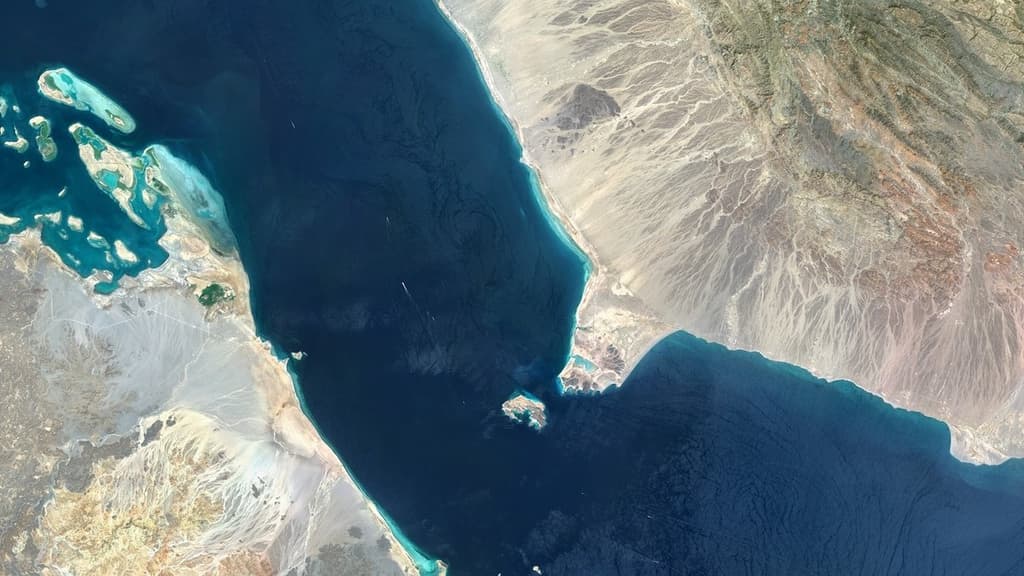
Recent Houthi attacks, including the August 24 strike on the Saudi-linked VLCC Amzan and earlier fatalities aboard the Tihamah, have sustained elevated war-risk premiums and selective avoidance of Saudi-linked tanker flows through Bab el-Mandeb, tempering overall volumes despite a partial rebound in containership and bulker traffic. Suez Canal transits reached post-crisis highs for the four weeks ending August 23, yet remained 40% below pre-2024 baselines, with Maersk and MSC rerouting select Asia-Europe services back via the strait. Weekly AIS-tracked crossings hovered near 200-269 in mid-to-late August, though dark transits and shifting mix toward ballast and sanctioned vessels introduce count uncertainty. Trader consensus around the 180-219 range reflects these offsetting dynamics between geopolitical friction and commercial normalization ahead of any further escalation.
Experimental AI-generated summary referencing Polymarket data. This is not trading advice and plays no role in how this market resolves. · UpdatedHow many ships transit Bab el-Mandeb Strait week of August 24?
How many ships transit Bab el-Mandeb Strait week of August 24?
180-199 35%
200-219 32%
220+ 19%
160-179 14%
$16,982 Vol.
$16,982 Vol.
<160
6%
160-179
14%
180-199
35%
200-219
32%
220+
19%
180-199 35%
200-219 32%
220+ 19%
160-179 14%
$16,982 Vol.
$16,982 Vol.
<160
6%
160-179
14%
180-199
35%
200-219
32%
220+
19%
Transit calls include container, dry bulk, roll-on/roll-off, general cargo, and tanker ships. Ships not reported by IMF Portwatch will not be considered.
This market will resolve as soon as all relevant data has been published. If the relevant data is not published within 14 calendar days of the specified date, this market will resolve based on the most recent data published up to that point.
In case of obvious data integrity issues (i.e., erroneous data), the market may remain open until the end of the third calendar day (ET) after the date on which such data is first released to allow for corrections. Data integrity issues refer only to clerical or other similar errors in the underlying data, and do not include cases where IMF Portwatch differs from alternative sources.
Only revisions to previously published data points made before all relevant data has been published will be considered.
The resolution source for this market will be IMF PortWatch, specifically the “Arrivals of Ships” data published for the Bab el-Mandeb Strait at https://portwatch.imf.org/pages/6b1814d64903461b98144a6cc25eb79c.
Market Opened: Aug 21, 2026, 3:08 PM ET
Resolver
0x69c47De9D...Transit calls include container, dry bulk, roll-on/roll-off, general cargo, and tanker ships. Ships not reported by IMF Portwatch will not be considered.
This market will resolve as soon as all relevant data has been published. If the relevant data is not published within 14 calendar days of the specified date, this market will resolve based on the most recent data published up to that point.
In case of obvious data integrity issues (i.e., erroneous data), the market may remain open until the end of the third calendar day (ET) after the date on which such data is first released to allow for corrections. Data integrity issues refer only to clerical or other similar errors in the underlying data, and do not include cases where IMF Portwatch differs from alternative sources.
Only revisions to previously published data points made before all relevant data has been published will be considered.
The resolution source for this market will be IMF PortWatch, specifically the “Arrivals of Ships” data published for the Bab el-Mandeb Strait at https://portwatch.imf.org/pages/6b1814d64903461b98144a6cc25eb79c.
Resolver
0x69c47De9D...Recent Houthi attacks, including the August 24 strike on the Saudi-linked VLCC Amzan and earlier fatalities aboard the Tihamah, have sustained elevated war-risk premiums and selective avoidance of Saudi-linked tanker flows through Bab el-Mandeb, tempering overall volumes despite a partial rebound in containership and bulker traffic. Suez Canal transits reached post-crisis highs for the four weeks ending August 23, yet remained 40% below pre-2024 baselines, with Maersk and MSC rerouting select Asia-Europe services back via the strait. Weekly AIS-tracked crossings hovered near 200-269 in mid-to-late August, though dark transits and shifting mix toward ballast and sanctioned vessels introduce count uncertainty. Trader consensus around the 180-219 range reflects these offsetting dynamics between geopolitical friction and commercial normalization ahead of any further escalation.
Experimental AI-generated summary referencing Polymarket data. This is not trading advice and plays no role in how this market resolves. · Updated
Beware of external links.
Beware of external links.
Frequently Asked Questions