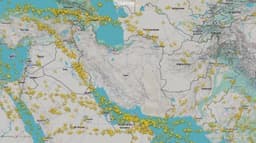
Ongoing military tensions in the US-Iran-Israel conflict continue to shape airspace decisions, with Iranian authorities imposing full or partial closures during strike cycles and retaliatory missile/drone activity. As of mid-2026, the Tehran FIR remains only partially open, with eastern corridors seeing limited overflight resumption after earlier phased reopenings while western sectors stay heavily restricted amid degraded radar, closed airports, and persistent EASA avoidance advisories. Recent breakdowns in ceasefires, including renewed actions near the Strait of Hormuz in July, have interrupted recovery and sustained high-risk conditions that prompt traders to weigh near-term escalation risks against any diplomatic pauses or de-escalation signals. Scheduled military or diplomatic developments within the resolution window could shift closure probabilities by triggering additional NOTAMs or safety-driven shutdowns.
Experimental AI-generated summary referencing Polymarket data. This is not trading advice and plays no role in how this market resolves. · UpdatedIran full airspace closure by...?
Iran full airspace closure by...?
$8,249,752 Vol.
August 15
1%
August 31
9%
September 30
17%
December 31
33%
$8,249,752 Vol.
August 15
1%
August 31
9%
September 30
17%
December 31
33%
A “general closure” refers to a cancellation or suspension of aviation which is generally applicable to all commercial flights transiting Iranian airspace (“Tehran FIR”). A qualifying closure must apply generally to all of Iran or the Tehran FIR; limited cancellations, delays, or partial closures will not qualify. A closure which applies generally to commercial aviation across Iranian airspace, with limited exceptions for certain categories of flights, however, will qualify (e.g. exceptions for certain flights pre-approved by the Iranian Civil Aviation Authority may be permitted).
Qualifying previous examples include the February 28, 2026 total closure of Iranian airspace (https://www.iranintl.com/en/202602289115) and the January 2026 total closure of Iranian airspace except to international flights with express governmental permission (https://www.reuters.com/world/middle-east/iran-shuts-airspace-most-flights-flightradar24-says-2026-01-14/). Non-qualifying examples include the January 27, 2026 partial closure of Iranian airspace around the Strait of Hormuz (https://www.aa.com.tr/en/middle-east/iran-issues-airspace-notice-for-military-drills-near-strait-of-hormuz/3812508), the April 2024 closure of Iran’s western airspace (https://www.reuters.com/world/middle-east/iranian-airports-cancel-flights-until-monday-morning-2024-04-14/), and the January 25 - April 25, 2026 VFR (Visual Flight Rules) flights suspension which did not broadly close commercial aviation in Iran (https://www.intellinews.com/iran-suspends-general-aviation-and-vfr-flights-in-new-airspace-directive-421997/).
Warnings, No-Fly-Zones, or other flight restrictions imposed by airlines or countries other than Iran will not be sufficient for a “Yes” resolution.
Airspace closures which occur solely due to weather conditions, earthquakes, or volcanic eruptions, will not qualify.
The primary resolution sources for this market will be official information from Iranian aviation authorities and a consensus of credible reporting.
Market Opened: Jul 18, 2026, 3:06 PM ET
Resolver
0x65070BE91...A “general closure” refers to a cancellation or suspension of aviation which is generally applicable to all commercial flights transiting Iranian airspace (“Tehran FIR”). A qualifying closure must apply generally to all of Iran or the Tehran FIR; limited cancellations, delays, or partial closures will not qualify. A closure which applies generally to commercial aviation across Iranian airspace, with limited exceptions for certain categories of flights, however, will qualify (e.g. exceptions for certain flights pre-approved by the Iranian Civil Aviation Authority may be permitted).
Qualifying previous examples include the February 28, 2026 total closure of Iranian airspace (https://www.iranintl.com/en/202602289115) and the January 2026 total closure of Iranian airspace except to international flights with express governmental permission (https://www.reuters.com/world/middle-east/iran-shuts-airspace-most-flights-flightradar24-says-2026-01-14/). Non-qualifying examples include the January 27, 2026 partial closure of Iranian airspace around the Strait of Hormuz (https://www.aa.com.tr/en/middle-east/iran-issues-airspace-notice-for-military-drills-near-strait-of-hormuz/3812508), the April 2024 closure of Iran’s western airspace (https://www.reuters.com/world/middle-east/iranian-airports-cancel-flights-until-monday-morning-2024-04-14/), and the January 25 - April 25, 2026 VFR (Visual Flight Rules) flights suspension which did not broadly close commercial aviation in Iran (https://www.intellinews.com/iran-suspends-general-aviation-and-vfr-flights-in-new-airspace-directive-421997/).
Warnings, No-Fly-Zones, or other flight restrictions imposed by airlines or countries other than Iran will not be sufficient for a “Yes” resolution.
Airspace closures which occur solely due to weather conditions, earthquakes, or volcanic eruptions, will not qualify.
The primary resolution sources for this market will be official information from Iranian aviation authorities and a consensus of credible reporting.
Resolver
0x65070BE91...Ongoing military tensions in the US-Iran-Israel conflict continue to shape airspace decisions, with Iranian authorities imposing full or partial closures during strike cycles and retaliatory missile/drone activity. As of mid-2026, the Tehran FIR remains only partially open, with eastern corridors seeing limited overflight resumption after earlier phased reopenings while western sectors stay heavily restricted amid degraded radar, closed airports, and persistent EASA avoidance advisories. Recent breakdowns in ceasefires, including renewed actions near the Strait of Hormuz in July, have interrupted recovery and sustained high-risk conditions that prompt traders to weigh near-term escalation risks against any diplomatic pauses or de-escalation signals. Scheduled military or diplomatic developments within the resolution window could shift closure probabilities by triggering additional NOTAMs or safety-driven shutdowns.
Experimental AI-generated summary referencing Polymarket data. This is not trading advice and plays no role in how this market resolves. · Updated


Beware of external links.
Beware of external links.
Frequently Asked Questions