
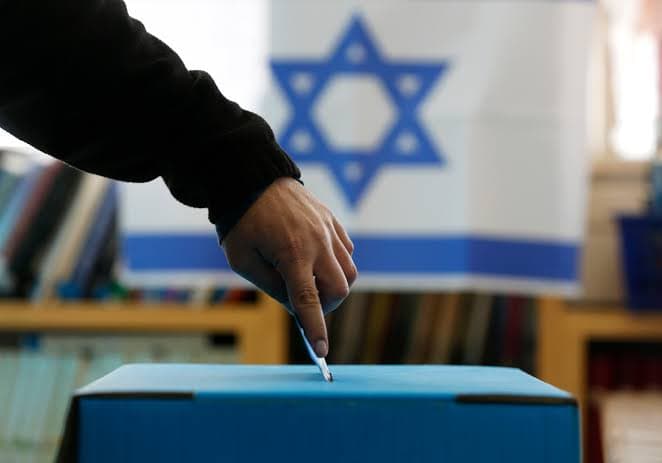
Israel's upcoming October 27, 2026, legislative election follows Knesset dissolution in July, with polls showing opposition alliances such as Bennett-Lapid's Together and Eisenkot's Yashar competitive against Netanyahu's Likud-led bloc. No party secures an outright majority, requiring 61 seats through coalitions amid refusals to partner with certain factions, including Arab parties or Netanyahu personally. Trader consensus favoring one election at 58.5% reflects expectations that these contests will produce viable majority arithmetic, while the 31.5% probability on two elections accounts for persistent fragmentation, bloc exclusions, and historical patterns of stalled negotiations seen in prior cycles. Recent polling volatility and campaign positioning on security and ultra-Orthodox issues reinforce this positioning without resolving coalition uncertainties.
Experimental AI-generated summary referencing Polymarket data. This is not trading advice and plays no role in how this market resolves. · Updated1 59%
2 32%
3 8%
5+ 6.1%
0
<1%
1
59%
2
32%
3
8%
4
5%
5+
6%
1 59%
2 32%
3 8%
5+ 6.1%
0
<1%
1
59%
2
32%
3
8%
4
5%
5+
6%
This market will resolve solely based on the number of elections that occur, where occurrence is defined as nationwide election-day voting open to eligible voters across Israel. Publication of an election’s results will have no bearing on this market.
Early or special voting mechanisms that occur before election day (e.g., voting by soldiers or citizens abroad) will not affect resolution. Only the dates of general election-day voting will count.
A government will be considered formed if it passes a vote of confidence in the Knesset.
The resolution source for this market will be a consensus of credible reporting.
Market Opened: Jul 28, 2026, 6:10 PM ET
Resolver
0x69c47De9D...This market will resolve solely based on the number of elections that occur, where occurrence is defined as nationwide election-day voting open to eligible voters across Israel. Publication of an election’s results will have no bearing on this market.
Early or special voting mechanisms that occur before election day (e.g., voting by soldiers or citizens abroad) will not affect resolution. Only the dates of general election-day voting will count.
A government will be considered formed if it passes a vote of confidence in the Knesset.
The resolution source for this market will be a consensus of credible reporting.
Resolver
0x69c47De9D...Israel's upcoming October 27, 2026, legislative election follows Knesset dissolution in July, with polls showing opposition alliances such as Bennett-Lapid's Together and Eisenkot's Yashar competitive against Netanyahu's Likud-led bloc. No party secures an outright majority, requiring 61 seats through coalitions amid refusals to partner with certain factions, including Arab parties or Netanyahu personally. Trader consensus favoring one election at 58.5% reflects expectations that these contests will produce viable majority arithmetic, while the 31.5% probability on two elections accounts for persistent fragmentation, bloc exclusions, and historical patterns of stalled negotiations seen in prior cycles. Recent polling volatility and campaign positioning on security and ultra-Orthodox issues reinforce this positioning without resolving coalition uncertainties.
Experimental AI-generated summary referencing Polymarket data. This is not trading advice and plays no role in how this market resolves. · Updated

Beware of external links.
Beware of external links.
Frequently Asked Questions