icon for How many ships transit Bab el-Mandeb Strait week of August 10?

How many ships transit Bab el-Mandeb Strait week of August 10?

icon for How many ships transit Bab el-Mandeb Strait week of August 10?

How many ships transit Bab el-Mandeb Strait week of August 10?

<180 47%

180-199 32%

220+ 15%

200-219 4.5%

Polymarket

$10,719 Vol.

<180 47%

180-199 32%

220+ 15%

200-219 4.5%

Polymarket

$10,719 Vol.

<180

$5,130 Vol.

47%

180-199

$1,829 Vol.

32%

200-219

$739 Vol.

4%

220+

$3,021 Vol.

15%

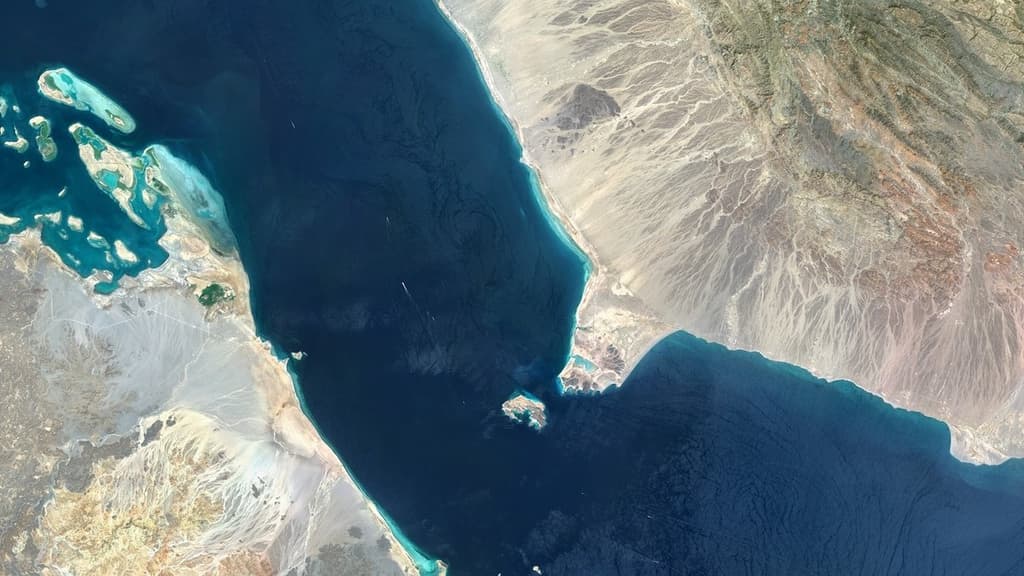
This market will resolve according to the total number of transit calls that IMF Portwatch reports for the Bab el-Mandeb Strait for all days from August 10, 2026, through August 16, 2026, inclusive. Transit calls include container, dry bulk, roll-on/roll-off, general cargo, and tanker ships. Ships not reported by IMF Portwatch will not be considered. This market will resolve as soon as all relevant data has been published. If the relevant data is not published within 14 calendar days of the specified date, this market will resolve based on the most recent data published up to that point. In case of obvious data integrity issues (i.e., erroneous data), the market may remain open until the end of the third calendar day (ET) after the date on which such data is first released to allow for corrections. Data integrity issues refer only to clerical or other similar errors in the underlying data, and do not include cases where IMF Portwatch differs from alternative sources. Only revisions to previously published data points made before all relevant data has been published will be considered. The resolution source for this market will be IMF PortWatch, specifically the “Arrivals of Ships” data published for the Bab el-Mandeb Strait at https://portwatch.imf.org/pages/6b1814d64903461b98144a6cc25eb79c.**Ongoing Houthi threats and a renewed maritime blockade targeting Saudi-linked shipping have sharply curtailed vessel transits through the Bab el-Mandeb Strait, positioning lower weekly volumes as the market consensus.** Since the Houthis announced the blockade around July 20, 2026, daily traffic has fallen 34–50% from prior levels, with averages dropping to roughly 31–32 ships per day in late July and early August according to Kpler and Clarksons data. This follows an initial plunge from 354 transits in the week before the action to 269–266 in subsequent weeks, driven by tanker rerouting and avoidance of the Red Sea corridor amid elevated risks. A lethal missile strike on a cargo vessel in the strait around August 11 further reinforced caution, killing crew and highlighting persistent security vulnerabilities despite earlier ceasefires. These developments have shifted trader sentiment toward the <180 and 180–199 buckets (combined ~85.5% implied probability), reflecting sustained suppression of volumes well below pre-disruption baselines. Broader factors include elevated war-risk insurance premiums, naval interventions redirecting vessels, and shipowners favoring the longer Cape of Good Hope route to avoid the chokepoint. While some stabilization has occurred, proximity to resolution for the August 10 week and any fresh incidents keep higher ranges (200+) at low single-digit odds. The market aggregates real-capital bets on these probability-weighted outcomes amid geopolitical uncertainty.

This market will resolve according to the total number of transit calls that IMF Portwatch reports for the Bab el-Mandeb Strait for all days from August 10, 2026, through August 16, 2026, inclusive.

Transit calls include container, dry bulk, roll-on/roll-off, general cargo, and tanker ships. Ships not reported by IMF Portwatch will not be considered.

This market will resolve as soon as all relevant data has been published. If the relevant data is not published within 14 calendar days of the specified date, this market will resolve based on the most recent data published up to that point.

In case of obvious data integrity issues (i.e., erroneous data), the market may remain open until the end of the third calendar day (ET) after the date on which such data is first released to allow for corrections. Data integrity issues refer only to clerical or other similar errors in the underlying data, and do not include cases where IMF Portwatch differs from alternative sources.

Only revisions to previously published data points made before all relevant data has been published will be considered.

The resolution source for this market will be IMF PortWatch, specifically the “Arrivals of Ships” data published for the Bab el-Mandeb Strait at https://portwatch.imf.org/pages/6b1814d64903461b98144a6cc25eb79c.
Volume
$10,719
End Date
Aug 16, 2026
Market Opened
Aug 8, 2026, 12:07 PM ET
This market will resolve according to the total number of transit calls that IMF Portwatch reports for the Bab el-Mandeb Strait for all days from August 10, 2026, through August 16, 2026, inclusive. Transit calls include container, dry bulk, roll-on/roll-off, general cargo, and tanker ships. Ships not reported by IMF Portwatch will not be considered. This market will resolve as soon as all relevant data has been published. If the relevant data is not published within 14 calendar days of the specified date, this market will resolve based on the most recent data published up to that point. In case of obvious data integrity issues (i.e., erroneous data), the market may remain open until the end of the third calendar day (ET) after the date on which such data is first released to allow for corrections. Data integrity issues refer only to clerical or other similar errors in the underlying data, and do not include cases where IMF Portwatch differs from alternative sources. Only revisions to previously published data points made before all relevant data has been published will be considered. The resolution source for this market will be IMF PortWatch, specifically the “Arrivals of Ships” data published for the Bab el-Mandeb Strait at https://portwatch.imf.org/pages/6b1814d64903461b98144a6cc25eb79c.
This market will resolve according to the total number of transit calls that IMF Portwatch reports for the Bab el-Mandeb Strait for all days from August 10, 2026, through August 16, 2026, inclusive. Transit calls include container, dry bulk, roll-on/roll-off, general cargo, and tanker ships. Ships not reported by IMF Portwatch will not be considered. This market will resolve as soon as all relevant data has been published. If the relevant data is not published within 14 calendar days of the specified date, this market will resolve based on the most recent data published up to that point. In case of obvious data integrity issues (i.e., erroneous data), the market may remain open until the end of the third calendar day (ET) after the date on which such data is first released to allow for corrections. Data integrity issues refer only to clerical or other similar errors in the underlying data, and do not include cases where IMF Portwatch differs from alternative sources. Only revisions to previously published data points made before all relevant data has been published will be considered. The resolution source for this market will be IMF PortWatch, specifically the “Arrivals of Ships” data published for the Bab el-Mandeb Strait at https://portwatch.imf.org/pages/6b1814d64903461b98144a6cc25eb79c.**Ongoing Houthi threats and a renewed maritime blockade targeting Saudi-linked shipping have sharply curtailed vessel transits through the Bab el-Mandeb Strait, positioning lower weekly volumes as the market consensus.** Since the Houthis announced the blockade around July 20, 2026, daily traffic has fallen 34–50% from prior levels, with averages dropping to roughly 31–32 ships per day in late July and early August according to Kpler and Clarksons data. This follows an initial plunge from 354 transits in the week before the action to 269–266 in subsequent weeks, driven by tanker rerouting and avoidance of the Red Sea corridor amid elevated risks. A lethal missile strike on a cargo vessel in the strait around August 11 further reinforced caution, killing crew and highlighting persistent security vulnerabilities despite earlier ceasefires. These developments have shifted trader sentiment toward the <180 and 180–199 buckets (combined ~85.5% implied probability), reflecting sustained suppression of volumes well below pre-disruption baselines. Broader factors include elevated war-risk insurance premiums, naval interventions redirecting vessels, and shipowners favoring the longer Cape of Good Hope route to avoid the chokepoint. While some stabilization has occurred, proximity to resolution for the August 10 week and any fresh incidents keep higher ranges (200+) at low single-digit odds. The market aggregates real-capital bets on these probability-weighted outcomes amid geopolitical uncertainty.

This market will resolve according to the total number of transit calls that IMF Portwatch reports for the Bab el-Mandeb Strait for all days from August 10, 2026, through August 16, 2026, inclusive.

Transit calls include container, dry bulk, roll-on/roll-off, general cargo, and tanker ships. Ships not reported by IMF Portwatch will not be considered.

This market will resolve as soon as all relevant data has been published. If the relevant data is not published within 14 calendar days of the specified date, this market will resolve based on the most recent data published up to that point.

In case of obvious data integrity issues (i.e., erroneous data), the market may remain open until the end of the third calendar day (ET) after the date on which such data is first released to allow for corrections. Data integrity issues refer only to clerical or other similar errors in the underlying data, and do not include cases where IMF Portwatch differs from alternative sources.

Only revisions to previously published data points made before all relevant data has been published will be considered.

The resolution source for this market will be IMF PortWatch, specifically the “Arrivals of Ships” data published for the Bab el-Mandeb Strait at https://portwatch.imf.org/pages/6b1814d64903461b98144a6cc25eb79c.
Volume
$10,719
End Date
Aug 16, 2026
Market Opened
Aug 8, 2026, 12:07 PM ET
This market will resolve according to the total number of transit calls that IMF Portwatch reports for the Bab el-Mandeb Strait for all days from August 10, 2026, through August 16, 2026, inclusive. Transit calls include container, dry bulk, roll-on/roll-off, general cargo, and tanker ships. Ships not reported by IMF Portwatch will not be considered. This market will resolve as soon as all relevant data has been published. If the relevant data is not published within 14 calendar days of the specified date, this market will resolve based on the most recent data published up to that point. In case of obvious data integrity issues (i.e., erroneous data), the market may remain open until the end of the third calendar day (ET) after the date on which such data is first released to allow for corrections. Data integrity issues refer only to clerical or other similar errors in the underlying data, and do not include cases where IMF Portwatch differs from alternative sources. Only revisions to previously published data points made before all relevant data has been published will be considered. The resolution source for this market will be IMF PortWatch, specifically the “Arrivals of Ships” data published for the Bab el-Mandeb Strait at https://portwatch.imf.org/pages/6b1814d64903461b98144a6cc25eb79c.

Beware of external links.

Frequently Asked Questions

"How many ships transit Bab el-Mandeb Strait week of August 10?" is a prediction market on Polymarket with 4 possible outcomes where traders buy and sell shares based on what they believe will happen. The current leading outcome is "<180" at 47%, followed by "180-199" at 33%. Prices reflect real-time crowd-sourced probabilities. For example, a share priced at 47¢ implies that the market collectively assigns a 47% chance to that outcome. These odds shift continuously as traders react to new developments and information. Shares in the correct outcome are redeemable for $1 each upon market resolution.

As of today, "How many ships transit Bab el-Mandeb Strait week of August 10?" has generated $10.7K in total trading volume since the market launched on Aug 8, 2026. This level of trading activity reflects strong engagement from the Polymarket community and helps ensure that the current odds are informed by a deep pool of market participants. You can track live price movements and trade on any outcome directly on this page.

To trade on "How many ships transit Bab el-Mandeb Strait week of August 10?," browse the 4 available outcomes listed on this page. Each outcome displays a current price representing the market's implied probability. To take a position, select the outcome you believe is most likely, choose "Yes" to trade in favor of it or "No" to trade against it, enter your amount, and click "Trade." If your chosen outcome is correct when the market resolves, your "Yes" shares pay out $1 each. If it's incorrect, they pay out $0. You can also sell your shares at any time before resolution if you want to lock in a profit or cut a loss.

The current frontrunner for "How many ships transit Bab el-Mandeb Strait week of August 10?" is "<180" at 47%, meaning the market assigns a 47% chance to that outcome. The next closest outcome is "180-199" at 33%. These odds update in real-time as traders buy and sell shares, so they reflect the latest collective view of what's most likely to happen. Check back frequently or bookmark this page to follow how the odds shift as new information emerges.

The resolution rules for "How many ships transit Bab el-Mandeb Strait week of August 10?" define exactly what needs to happen for each outcome to be declared a winner — including the official data sources used to determine the result. You can review the complete resolution criteria in the "Rules" section on this page above the comments. We recommend reading the rules carefully before trading, as they specify the precise conditions, edge cases, and sources that govern how this market is settled.