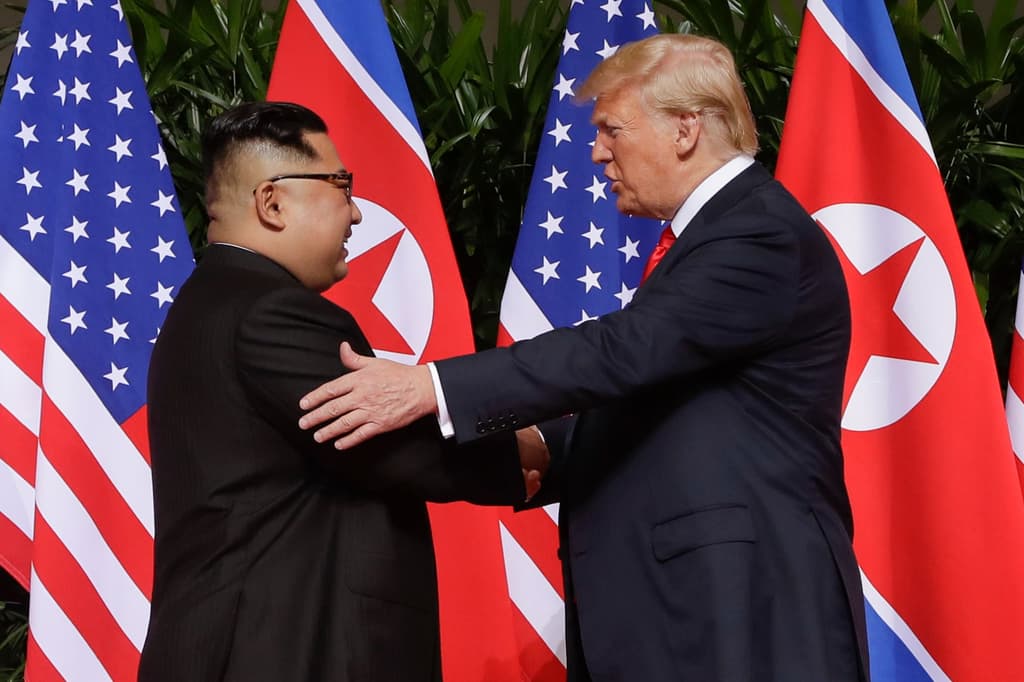
Recent U.S. moves under President Trump, including the mid-August decision to scale back joint military exercises with South Korea and public praise for Kim Jong Un, have renewed focus on possible bilateral talks. Trump has indicated openness to a meeting this year, potentially tied to the November APEC summit in China, while noting positive responses from Pyongyang. North Korea continues to condition any engagement on U.S. recognition of its nuclear status and abandonment of denuclearization demands as a precondition. South Korean officials have voiced support for renewed diplomacy to reduce peninsula tensions. These developments, alongside Trump's personal history of direct engagement, shape trader views on the timing and likelihood of a summit before year-end amid ongoing regional security dynamics.
Experimental AI-generated summary referencing Polymarket data. This is not trading advice and plays no role in how this market resolves. · UpdatedAugust 31
3%
December 31
44%
$535 Vol.
August 31
3%
December 31
44%
A diplomatic meeting occurs when representatives of both listed countries who are acting in an official capacity and are authorized to engage in diplomacy on behalf of their respective governments or governing authorities deliberately meet for the purpose of diplomacy or negotiation. A qualifying meeting need not result in any agreement, joint statement, or further engagement.
A direct meeting refers to a diplomatic meeting where the representatives of both countries directly interact with each other in person. Meetings conducted through translators qualify, provided direct, face-to-face communication occurs. An indirect meeting refers to a meeting conducted indirectly through designated mediators or facilitators. A qualifying indirect meeting must meet both of the following criteria (i) the designated intermediaries act with the knowledge and authorization of both entities; (ii) representatives of both entities are physically present in the same facility, venue, or city as part of a single organized round of talks convened for the purpose of diplomatic engagement, with the intermediary conveying communications between the representatives or delegations on the same day. “The same day” means the same calendar day local time at the meeting location.
Sessions, proceedings, or convenings of standing international organizations, treaty bodies, or recurring multilateral summits or conferences (e.g., the United Nations General Assembly, G7, and G20 summits) do not qualify, unless a qualifying and deliberate diplomatic meeting between representatives of the listed countries is separately held alongside such a convening.
The following do not qualify as either a direct or indirect diplomatic meeting: chance encounters; standalone exchanges limited to greetings, courtesies, or photo opportunities; meetings conducted remotely, by telephone, or by any other means where the relevant representatives are not physically present at the same facility, venue, or city on the same day; discussions involving persons not authorized to engage in diplomacy or negotiation on behalf of their respective governments.
The resolution sources for this market will be official information from the governments of the United States and North Korea and a consensus of credible reporting.
Market Opened: Aug 18, 2026, 3:52 PM ET
Resolver
0x65070BE91...A diplomatic meeting occurs when representatives of both listed countries who are acting in an official capacity and are authorized to engage in diplomacy on behalf of their respective governments or governing authorities deliberately meet for the purpose of diplomacy or negotiation. A qualifying meeting need not result in any agreement, joint statement, or further engagement.
A direct meeting refers to a diplomatic meeting where the representatives of both countries directly interact with each other in person. Meetings conducted through translators qualify, provided direct, face-to-face communication occurs. An indirect meeting refers to a meeting conducted indirectly through designated mediators or facilitators. A qualifying indirect meeting must meet both of the following criteria (i) the designated intermediaries act with the knowledge and authorization of both entities; (ii) representatives of both entities are physically present in the same facility, venue, or city as part of a single organized round of talks convened for the purpose of diplomatic engagement, with the intermediary conveying communications between the representatives or delegations on the same day. “The same day” means the same calendar day local time at the meeting location.
Sessions, proceedings, or convenings of standing international organizations, treaty bodies, or recurring multilateral summits or conferences (e.g., the United Nations General Assembly, G7, and G20 summits) do not qualify, unless a qualifying and deliberate diplomatic meeting between representatives of the listed countries is separately held alongside such a convening.
The following do not qualify as either a direct or indirect diplomatic meeting: chance encounters; standalone exchanges limited to greetings, courtesies, or photo opportunities; meetings conducted remotely, by telephone, or by any other means where the relevant representatives are not physically present at the same facility, venue, or city on the same day; discussions involving persons not authorized to engage in diplomacy or negotiation on behalf of their respective governments.
The resolution sources for this market will be official information from the governments of the United States and North Korea and a consensus of credible reporting.
Resolver
0x65070BE91...Recent U.S. moves under President Trump, including the mid-August decision to scale back joint military exercises with South Korea and public praise for Kim Jong Un, have renewed focus on possible bilateral talks. Trump has indicated openness to a meeting this year, potentially tied to the November APEC summit in China, while noting positive responses from Pyongyang. North Korea continues to condition any engagement on U.S. recognition of its nuclear status and abandonment of denuclearization demands as a precondition. South Korean officials have voiced support for renewed diplomacy to reduce peninsula tensions. These developments, alongside Trump's personal history of direct engagement, shape trader views on the timing and likelihood of a summit before year-end amid ongoing regional security dynamics.
Experimental AI-generated summary referencing Polymarket data. This is not trading advice and plays no role in how this market resolves. · Updated
Beware of external links.
Beware of external links.
Frequently Asked Questions