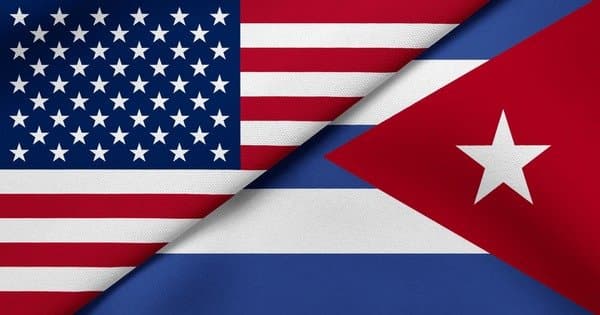
US policy toward Cuba in 2026 has centered on economic pressure through a January executive order imposing a fuel blockade and tariffs on third-country oil suppliers, alongside May sanctions on Cuban military entities and the indictment of Raúl Castro. These measures, paired with recent August actions targeting arms procurement networks, reflect an administration preference for coercive diplomacy and regime transition talks modeled on Venezuela, rather than direct military engagement. Pentagon contingency planning has occurred amid the Iran conflict's resource demands, yet no large-scale troop deployments or offensive staging have materialized. Cuba has pursued negotiations and prisoner releases while preparing defensive measures, supporting trader consensus that a clash remains unlikely through year-end absent major escalation triggers.
Experimental AI-generated summary referencing Polymarket data. This is not trading advice and plays no role in how this market resolves. · UpdatedUS x Cuba military clash in 2026?
US x Cuba military clash in 2026?
$238,008 Vol.
$238,008 Vol.
$238,008 Vol.
$238,008 Vol.
A "military encounter" is defined as any incident involving the use of force such as missile strikes, artillery fire, exchange of gunfire, or other forms of direct military engagement between US and Cuban military forces. Non-violent actions, such as warning shots, artillery fire into uninhabited areas, or missile launches that land in territorial waters or pass through airspace, will not qualify for a "Yes" resolution. Intentional ship ramming that results in significant damage to (e.g., a hole in the hull) or the sinking of a military ship by another will count toward a "Yes" resolution, however minor damage (scrapes, dents) will not.
Note: the United States Coast Guard is considered part of the United States military, and the Cuban Border Guard is considered part of the Cuban military.
The resolution source for this market will be a consensus of credible reporting.
Market Opened: Feb 25, 2026, 7:31 PM ET
Resolver
0x65070BE91...A "military encounter" is defined as any incident involving the use of force such as missile strikes, artillery fire, exchange of gunfire, or other forms of direct military engagement between US and Cuban military forces. Non-violent actions, such as warning shots, artillery fire into uninhabited areas, or missile launches that land in territorial waters or pass through airspace, will not qualify for a "Yes" resolution. Intentional ship ramming that results in significant damage to (e.g., a hole in the hull) or the sinking of a military ship by another will count toward a "Yes" resolution, however minor damage (scrapes, dents) will not.
Note: the United States Coast Guard is considered part of the United States military, and the Cuban Border Guard is considered part of the Cuban military.
The resolution source for this market will be a consensus of credible reporting.
Resolver
0x65070BE91...US policy toward Cuba in 2026 has centered on economic pressure through a January executive order imposing a fuel blockade and tariffs on third-country oil suppliers, alongside May sanctions on Cuban military entities and the indictment of Raúl Castro. These measures, paired with recent August actions targeting arms procurement networks, reflect an administration preference for coercive diplomacy and regime transition talks modeled on Venezuela, rather than direct military engagement. Pentagon contingency planning has occurred amid the Iran conflict's resource demands, yet no large-scale troop deployments or offensive staging have materialized. Cuba has pursued negotiations and prisoner releases while preparing defensive measures, supporting trader consensus that a clash remains unlikely through year-end absent major escalation triggers.
Experimental AI-generated summary referencing Polymarket data. This is not trading advice and plays no role in how this market resolves. · Updated

Beware of external links.
Beware of external links.
Frequently Asked Questions