
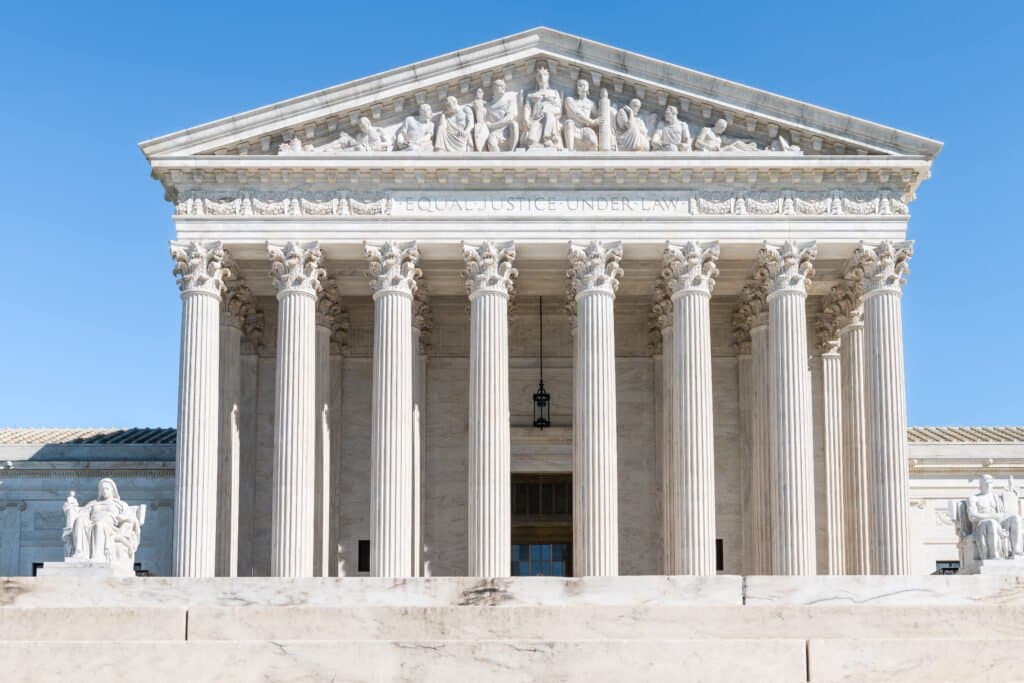
Recent district court fair use rulings favoring AI companies like Meta and Anthropic, alongside Ninth Circuit decisions rejecting DMCA claims in OpenAI and Microsoft cases, keep major AI training disputes at lower levels without pending cert petitions. The Supreme Court already declined review of the Thaler AI-generated art matter in March 2026, and standard timelines for circuit splits on large language model issues make a grant before December 2026 unlikely. Ongoing summary judgment proceedings in the New York Times v. OpenAI litigation and similar suits, bolstered by recent Justice Department support for transformative AI training, reinforce trader consensus around the high probability of no acceptance this year.
Experimental AI-generated summary referencing Polymarket data. This is not trading advice and plays no role in how this market resolves. · Updated10% chance
NEW
NEW
Dec 31, 2026
10% chance
NEW
NEW
Dec 31, 2026
This market will resolve to "Yes" if the Supreme Court of the United States grants certiorari in a case concerning artificial intelligence and United States copyright law by December 31, 2026, 11:59 PM ET. Otherwise, this market will resolve to "No".
A case qualifies if at least one of its claims or defenses, as described in the petition for certiorari or in the lower court's decision under review, concerns any of the following: (1) whether using copyrighted works to train, develop, or fine-tune an artificial intelligence model infringes copyright or is fair use; (2) whether outputs generated by an artificial intelligence model infringe copyright, or who is liable for such infringement; (3) whether works created in whole or in part by an artificial intelligence system are eligible for copyright protection, or who may be their author; or (4) any other claim under Title 17 of the United States Code, including the Digital Millennium Copyright Act, that arises from the training or development of an artificial intelligence model or from its outputs. An artificial intelligence model means any system that learns from data or generates content, including machine-learning and generative AI models such as large language, image, audio, and video models; the petition or decision does not need to use the words "artificial intelligence" or "AI". A grant limited to a procedural, jurisdictional, or remedial question in a qualifying case will count. A case in which an artificial intelligence developer is a party but no claim or defense concerns the matters listed above will not qualify.
Granting certiorari means an order granting a petition for a writ of certiorari, including certiorari before judgment. An order that grants certiorari, vacates the lower court's judgment, and remands without further review (a GVR order) will not qualify. Denials of certiorari, orders inviting the Solicitor General to file a brief, relisting of a petition, and rulings on emergency applications or stays will not qualify. A qualifying case does not need to be pending before the Court at the time this market is created, and a qualifying grant will resolve this market to "Yes" even if the case is later dismissed, settled, or otherwise removed from the Court's docket.
The grant must appear on the Supreme Court's official orders list or docket dated on or before December 31, 2026, 11:59 PM ET; the date of the Court's order governs, regardless of when reporting confirms it. The case does not need to be heard, scheduled, or decided by the deadline to qualify.
The primary resolution source for this market will be official information from the Supreme Court of the United States (https://www.supremecourt.gov), including its orders lists and case dockets; however, a consensus of credible reporting may also be used.Recent district court fair use rulings favoring AI companies like Meta and Anthropic, alongside Ninth Circuit decisions rejecting DMCA claims in OpenAI and Microsoft cases, keep major AI training disputes at lower levels without pending cert petitions. The Supreme Court already declined review of the Thaler AI-generated art matter in March 2026, and standard timelines for circuit splits on large language model issues make a grant before December 2026 unlikely. Ongoing summary judgment proceedings in the New York Times v. OpenAI litigation and similar suits, bolstered by recent Justice Department support for transformative AI training, reinforce trader consensus around the high probability of no acceptance this year.
This market will resolve to "Yes" if the Supreme Court of the United States grants certiorari in a case concerning artificial intelligence and United States copyright law by December 31, 2026, 11:59 PM ET. Otherwise, this market will resolve to "No".
A case qualifies if at least one of its claims or defenses, as described in the petition for certiorari or in the lower court's decision under review, concerns any of the following: (1) whether using copyrighted works to train, develop, or fine-tune an artificial intelligence model infringes copyright or is fair use; (2) whether outputs generated by an artificial intelligence model infringe copyright, or who is liable for such infringement; (3) whether works created in whole or in part by an artificial intelligence system are eligible for copyright protection, or who may be their author; or (4) any other claim under Title 17 of the United States Code, including the Digital Millennium Copyright Act, that arises from the training or development of an artificial intelligence model or from its outputs. An artificial intelligence model means any system that learns from data or generates content, including machine-learning and generative AI models such as large language, image, audio, and video models; the petition or decision does not need to use the words "artificial intelligence" or "AI". A grant limited to a procedural, jurisdictional, or remedial question in a qualifying case will count. A case in which an artificial intelligence developer is a party but no claim or defense concerns the matters listed above will not qualify.
Granting certiorari means an order granting a petition for a writ of certiorari, including certiorari before judgment. An order that grants certiorari, vacates the lower court's judgment, and remands without further review (a GVR order) will not qualify. Denials of certiorari, orders inviting the Solicitor General to file a brief, relisting of a petition, and rulings on emergency applications or stays will not qualify. A qualifying case does not need to be pending before the Court at the time this market is created, and a qualifying grant will resolve this market to "Yes" even if the case is later dismissed, settled, or otherwise removed from the Court's docket.
The grant must appear on the Supreme Court's official orders list or docket dated on or before December 31, 2026, 11:59 PM ET; the date of the Court's order governs, regardless of when reporting confirms it. The case does not need to be heard, scheduled, or decided by the deadline to qualify.
The primary resolution source for this market will be official information from the Supreme Court of the United States (https://www.supremecourt.gov), including its orders lists and case dockets; however, a consensus of credible reporting may also be used.
A case qualifies if at least one of its claims or defenses, as described in the petition for certiorari or in the lower court's decision under review, concerns any of the following: (1) whether using copyrighted works to train, develop, or fine-tune an artificial intelligence model infringes copyright or is fair use; (2) whether outputs generated by an artificial intelligence model infringe copyright, or who is liable for such infringement; (3) whether works created in whole or in part by an artificial intelligence system are eligible for copyright protection, or who may be their author; or (4) any other claim under Title 17 of the United States Code, including the Digital Millennium Copyright Act, that arises from the training or development of an artificial intelligence model or from its outputs. An artificial intelligence model means any system that learns from data or generates content, including machine-learning and generative AI models such as large language, image, audio, and video models; the petition or decision does not need to use the words "artificial intelligence" or "AI". A grant limited to a procedural, jurisdictional, or remedial question in a qualifying case will count. A case in which an artificial intelligence developer is a party but no claim or defense concerns the matters listed above will not qualify.
Granting certiorari means an order granting a petition for a writ of certiorari, including certiorari before judgment. An order that grants certiorari, vacates the lower court's judgment, and remands without further review (a GVR order) will not qualify. Denials of certiorari, orders inviting the Solicitor General to file a brief, relisting of a petition, and rulings on emergency applications or stays will not qualify. A qualifying case does not need to be pending before the Court at the time this market is created, and a qualifying grant will resolve this market to "Yes" even if the case is later dismissed, settled, or otherwise removed from the Court's docket.
The grant must appear on the Supreme Court's official orders list or docket dated on or before December 31, 2026, 11:59 PM ET; the date of the Court's order governs, regardless of when reporting confirms it. The case does not need to be heard, scheduled, or decided by the deadline to qualify.
The primary resolution source for this market will be official information from the Supreme Court of the United States (https://www.supremecourt.gov), including its orders lists and case dockets; however, a consensus of credible reporting may also be used.
Market Opened: Sep 17, 2026, 8:03 PM ET
Volume
$300End Date
Jan 1, 2027Market Opened
Sep 17, 2026, 8:03 PM ETResolution Source
https://www.supremecourt.govResolver
0x65070BE91...This market will resolve to "Yes" if the Supreme Court of the United States grants certiorari in a case concerning artificial intelligence and United States copyright law by December 31, 2026, 11:59 PM ET. Otherwise, this market will resolve to "No".
A case qualifies if at least one of its claims or defenses, as described in the petition for certiorari or in the lower court's decision under review, concerns any of the following: (1) whether using copyrighted works to train, develop, or fine-tune an artificial intelligence model infringes copyright or is fair use; (2) whether outputs generated by an artificial intelligence model infringe copyright, or who is liable for such infringement; (3) whether works created in whole or in part by an artificial intelligence system are eligible for copyright protection, or who may be their author; or (4) any other claim under Title 17 of the United States Code, including the Digital Millennium Copyright Act, that arises from the training or development of an artificial intelligence model or from its outputs. An artificial intelligence model means any system that learns from data or generates content, including machine-learning and generative AI models such as large language, image, audio, and video models; the petition or decision does not need to use the words "artificial intelligence" or "AI". A grant limited to a procedural, jurisdictional, or remedial question in a qualifying case will count. A case in which an artificial intelligence developer is a party but no claim or defense concerns the matters listed above will not qualify.
Granting certiorari means an order granting a petition for a writ of certiorari, including certiorari before judgment. An order that grants certiorari, vacates the lower court's judgment, and remands without further review (a GVR order) will not qualify. Denials of certiorari, orders inviting the Solicitor General to file a brief, relisting of a petition, and rulings on emergency applications or stays will not qualify. A qualifying case does not need to be pending before the Court at the time this market is created, and a qualifying grant will resolve this market to "Yes" even if the case is later dismissed, settled, or otherwise removed from the Court's docket.
The grant must appear on the Supreme Court's official orders list or docket dated on or before December 31, 2026, 11:59 PM ET; the date of the Court's order governs, regardless of when reporting confirms it. The case does not need to be heard, scheduled, or decided by the deadline to qualify.
The primary resolution source for this market will be official information from the Supreme Court of the United States (https://www.supremecourt.gov), including its orders lists and case dockets; however, a consensus of credible reporting may also be used.Recent district court fair use rulings favoring AI companies like Meta and Anthropic, alongside Ninth Circuit decisions rejecting DMCA claims in OpenAI and Microsoft cases, keep major AI training disputes at lower levels without pending cert petitions. The Supreme Court already declined review of the Thaler AI-generated art matter in March 2026, and standard timelines for circuit splits on large language model issues make a grant before December 2026 unlikely. Ongoing summary judgment proceedings in the New York Times v. OpenAI litigation and similar suits, bolstered by recent Justice Department support for transformative AI training, reinforce trader consensus around the high probability of no acceptance this year.
This market will resolve to "Yes" if the Supreme Court of the United States grants certiorari in a case concerning artificial intelligence and United States copyright law by December 31, 2026, 11:59 PM ET. Otherwise, this market will resolve to "No".
A case qualifies if at least one of its claims or defenses, as described in the petition for certiorari or in the lower court's decision under review, concerns any of the following: (1) whether using copyrighted works to train, develop, or fine-tune an artificial intelligence model infringes copyright or is fair use; (2) whether outputs generated by an artificial intelligence model infringe copyright, or who is liable for such infringement; (3) whether works created in whole or in part by an artificial intelligence system are eligible for copyright protection, or who may be their author; or (4) any other claim under Title 17 of the United States Code, including the Digital Millennium Copyright Act, that arises from the training or development of an artificial intelligence model or from its outputs. An artificial intelligence model means any system that learns from data or generates content, including machine-learning and generative AI models such as large language, image, audio, and video models; the petition or decision does not need to use the words "artificial intelligence" or "AI". A grant limited to a procedural, jurisdictional, or remedial question in a qualifying case will count. A case in which an artificial intelligence developer is a party but no claim or defense concerns the matters listed above will not qualify.
Granting certiorari means an order granting a petition for a writ of certiorari, including certiorari before judgment. An order that grants certiorari, vacates the lower court's judgment, and remands without further review (a GVR order) will not qualify. Denials of certiorari, orders inviting the Solicitor General to file a brief, relisting of a petition, and rulings on emergency applications or stays will not qualify. A qualifying case does not need to be pending before the Court at the time this market is created, and a qualifying grant will resolve this market to "Yes" even if the case is later dismissed, settled, or otherwise removed from the Court's docket.
The grant must appear on the Supreme Court's official orders list or docket dated on or before December 31, 2026, 11:59 PM ET; the date of the Court's order governs, regardless of when reporting confirms it. The case does not need to be heard, scheduled, or decided by the deadline to qualify.
The primary resolution source for this market will be official information from the Supreme Court of the United States (https://www.supremecourt.gov), including its orders lists and case dockets; however, a consensus of credible reporting may also be used.
A case qualifies if at least one of its claims or defenses, as described in the petition for certiorari or in the lower court's decision under review, concerns any of the following: (1) whether using copyrighted works to train, develop, or fine-tune an artificial intelligence model infringes copyright or is fair use; (2) whether outputs generated by an artificial intelligence model infringe copyright, or who is liable for such infringement; (3) whether works created in whole or in part by an artificial intelligence system are eligible for copyright protection, or who may be their author; or (4) any other claim under Title 17 of the United States Code, including the Digital Millennium Copyright Act, that arises from the training or development of an artificial intelligence model or from its outputs. An artificial intelligence model means any system that learns from data or generates content, including machine-learning and generative AI models such as large language, image, audio, and video models; the petition or decision does not need to use the words "artificial intelligence" or "AI". A grant limited to a procedural, jurisdictional, or remedial question in a qualifying case will count. A case in which an artificial intelligence developer is a party but no claim or defense concerns the matters listed above will not qualify.
Granting certiorari means an order granting a petition for a writ of certiorari, including certiorari before judgment. An order that grants certiorari, vacates the lower court's judgment, and remands without further review (a GVR order) will not qualify. Denials of certiorari, orders inviting the Solicitor General to file a brief, relisting of a petition, and rulings on emergency applications or stays will not qualify. A qualifying case does not need to be pending before the Court at the time this market is created, and a qualifying grant will resolve this market to "Yes" even if the case is later dismissed, settled, or otherwise removed from the Court's docket.
The grant must appear on the Supreme Court's official orders list or docket dated on or before December 31, 2026, 11:59 PM ET; the date of the Court's order governs, regardless of when reporting confirms it. The case does not need to be heard, scheduled, or decided by the deadline to qualify.
The primary resolution source for this market will be official information from the Supreme Court of the United States (https://www.supremecourt.gov), including its orders lists and case dockets; however, a consensus of credible reporting may also be used.
Volume
$300End Date
Jan 1, 2027Market Opened
Sep 17, 2026, 8:03 PM ETResolution Source
https://www.supremecourt.govResolver
0x65070BE91...Recent district court fair use rulings favoring AI companies like Meta and Anthropic, alongside Ninth Circuit decisions rejecting DMCA claims in OpenAI and Microsoft cases, keep major AI training disputes at lower levels without pending cert petitions. The Supreme Court already declined review of the Thaler AI-generated art matter in March 2026, and standard timelines for circuit splits on large language model issues make a grant before December 2026 unlikely. Ongoing summary judgment proceedings in the New York Times v. OpenAI litigation and similar suits, bolstered by recent Justice Department support for transformative AI training, reinforce trader consensus around the high probability of no acceptance this year.
Experimental AI-generated summary referencing Polymarket data. This is not trading advice and plays no role in how this market resolves. · Updated
Beware of external links.
Beware of external links.
Frequently Asked Questions